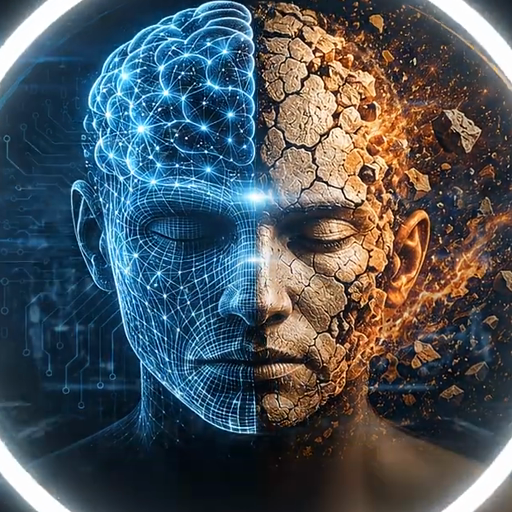
Documents in. Facts out.
MANTIS is an ultra-fast knowledge-graph database. It turns raw documents into a knowledge graph — a structured web of entities, relationships, and provenance that an AI can actually reason over. Not fuzzy similarity across chunks of text, but facts an agent can trust. And it traverses them in the blink of an eye.

The default way to give a model your knowledge is to chop documents into fragments, embed them as vectors, and retrieve the ones that sound most like the question. It's fast to set up — and it quietly fails where it matters. Chunking severs the context that made a fact a fact. Similarity is a guess, not a truth. And nothing in a pile of look-alike passages tells the model how two facts connect.
So when the answer lives across several documents — a chain of cause and effect, a policy that touches three departments, a person linked to an event through an intermediary — plain semantic search comes back with plausible-sounding text and no way to reason across it. That gap is exactly where models hallucinate.
The most important information isn't in any single passage. It's in the connections between them — and connections are what a knowledge graph is built to hold.
Point MANTIS at your documents and it doesn't just store the text — it abstracts it. It reads the content, pulls out the entities and the relationships between them, resolves the duplicates, and writes them into a graph where every edge is typed, directional, and traceable back to its source. From then on, your AI orients itself with facts instead of guessing from fragments.
PDFs, records, email, transcripts, free text — the messy, unstructured material where your knowledge actually lives.
MANTIS identifies the entities, extracts the relationships between them as facts, resolves references to the same real-world thing, and keeps a provenance link to the exact source of every claim.
Those facts become a living knowledge graph — nodes and typed edges — that MANTIS traverses in sub-milliseconds, no matter how large it grows.
Your agent queries the graph the way it reasons: how are these connected, what does this depend on, what's true right now — and gets structured, auditable facts back instead of a bag of similar-looking text.
The strongest systems use both: vector search for broad recall over text, and a knowledge graph as the factual backbone. MANTIS is that backbone.
Across independent and peer-reviewed research, giving a model a knowledge graph instead of loose text produces the same effect again and again: higher accuracy, fewer hallucinations, answers you can audit.
more accurate at answering enterprise questions when the same data was modeled as a knowledge graph instead of queried as raw records.
data.world benchmark, 2023hallucination rate on a clinical Q&A task, once answers were grounded in a knowledge graph rather than generated from text alone.
J. Biomedical Informatics, 2026higher recall accuracy for agent memory backed by a temporal knowledge graph — while cutting response latency by up to 90%.
Zep / Graphiti, 2025Baseline retrieval "struggles to connect the dots." A knowledge graph is how you connect them.
A note on honesty: a graph doesn't magically make a model perfect — it grounds and dramatically reduces error, and makes what remains traceable. That's the difference between an answer you hope is right and one you can check.
People, things, events, and every meaningful relationship between them — your world as it actually is, not as isolated fragments of text.
Following five hops across a billion facts costs about the same as five across a thousand. Fast enough to reason inside a live agent loop, not a nightly batch.
Each fact carries a link to its source, so an agent's reasoning is auditable — you can trace any claim straight back to the document it came from.
A minimal footprint that runs right alongside your application — the power of a graph platform without the weight of one.
MANTIS is the grounding layer for LLMs and autonomous agents — the place a system stores what it has learned as facts and retrieves them by how they relate, not by how they sound. It turns document libraries into fact-grounded RAG, gives agents a memory that tracks entities and how they change over time, and powers recommendations, fraud and network analysis, and any application whose value lives in the connections. It's the knowledge layer of the AAIRC stack — the factual ground the rest of the intelligence stands on.
Named for the mantis shrimp — one of nature's most sophisticated sensory systems — built to see what connects.